You're Getting Bookings, But Are You Building Your Business?
The hidden cost of relying on third-party booking platforms, and why businesses should start owning the systems behind their reservations.
By Hamza Hourri
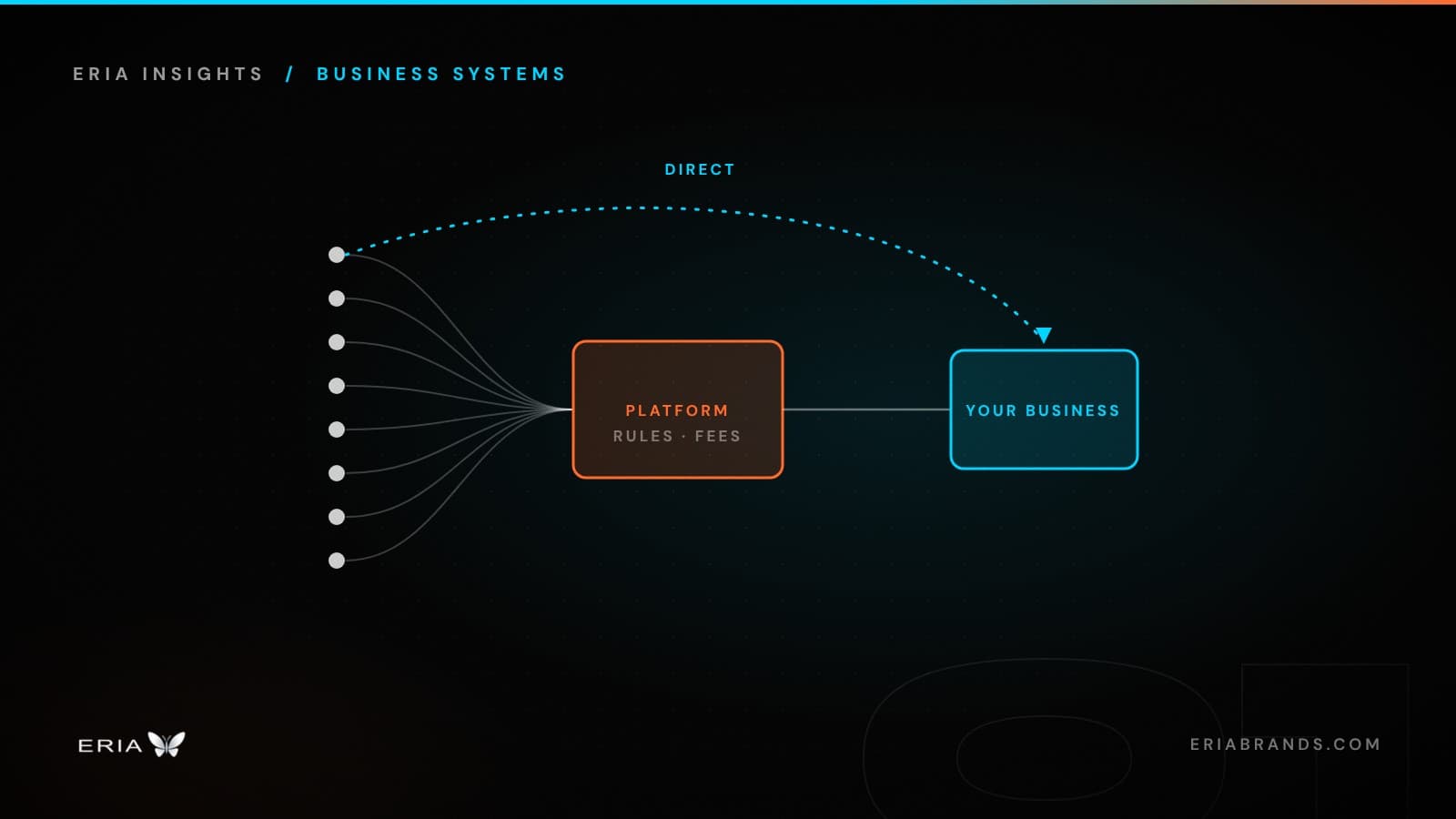
The problem with depending on someone else's platform
Third-party booking platforms can be extremely useful. They help customers discover hotels, tours, restaurants, clinics, activities, and other services they might not find otherwise. For a business trying to reach a wider audience, that exposure has real value.
The problem begins when a business depends on those platforms for almost every booking.
When the platform becomes the main place customers find you, compare you, book you, and communicate with you, a large part of your customer journey takes place outside the systems you control. You may be receiving reservations, but you are also depending on another company's infrastructure, policies, fees, and access rules.
That raises an important question: are you using a platform to support your business, or has your business become dependent on the platform?
Every booking can come with a cost
Depending on the platform and agreement, a booking may involve a commission, transaction fee, subscription, advertising cost, or a combination of charges. These costs can be reasonable when the platform brings customers you would not otherwise reach.
But they should be understood as part of your acquisition cost.
Consider a tour operator receiving 200 bookings per month, with an average booking value of $100. That represents $20,000 in monthly booking revenue. If every booking carried an assumed 15% commission, the commission would total $3,000 per month, or $36,000 over a year.
This is an illustration, not a claim about a particular platform or business. Actual fees vary, and the platform may be providing valuable customer acquisition that would otherwise require marketing spend. The important step is to understand what each channel costs and what value it brings.
You're collecting bookings, but are you building customer relationships?
A booking is more than a transaction. It can be the beginning of a relationship.
However, when reservations happen entirely through an external platform, the business may have limited access to customer details, booking history, or permission to contact customers again. What is available depends on the platform's policies, the business agreement, customer consent, and applicable privacy laws.
That can make it harder to build a direct relationship after the first visit or purchase.
An owned booking experience can help a business manage customer records and booking history in one place, request the right permissions, and support appropriate follow-ups, repeat bookings, and loyalty initiatives. Owning the system does not mean owning a person's data without limits. It means having a clearer, compliant way to manage the customer relationship your business is responsible for.
Your business is operating under someone else's rules
External platforms decide how their products work. Their fees, terms, features, visibility mechanisms, and technical requirements can change. A business may need to adapt when a platform changes its policies or the way customers interact with it.
That does not make these platforms bad. It simply means they are not infrastructure you control.
If most of your bookings come from one external source, a change outside your business can have a meaningful effect on your operations. Diversifying how customers discover and book you reduces the risk of depending on a single channel.
Disconnected bookings create unnecessary operational work
The cost is not always visible on an invoice. It can also appear in staff time.
A team might check availability in one place, copy reservation details into a spreadsheet, confirm payment through another service, message the customer manually, and update a separate calendar. When information is spread across systems, mistakes and delays become more likely.
A connected booking system can bring availability, reservations, customer details, payment status, confirmations, cancellations, and staff workflows into a more consistent process. The right setup depends on the business. A small activity provider does not necessarily need the same features as a multi-location hotel group.
Your website should be able to generate bookings, not just display information
A business website is often treated as a digital brochure: it explains the service, shows photos, lists contact details, and asks visitors to call or send a message.
For a booking-based business, the website can do more. It can help a customer choose a service, select a date or time, check availability, submit their details, pay or request confirmation, and receive the next steps.
The aim is not to add technology for its own sake. It is to remove friction between a customer deciding they want your service and successfully making a reservation.
What would a custom booking system actually give your business?
A system designed around your operation can include service and schedule selection, live or managed availability, customer details, payment handling, booking confirmations, cancellation rules, staff dashboards, booking history, and reporting.
It can also connect with tools you already use, where integrations are technically and commercially appropriate.
The value is not simply that the software belongs to your business. The value is that the process can be designed around how your team actually works and how your customers prefer to book.
Does investing in your own booking system make financial sense?
Start with the numbers rather than the technology.
Imagine a business currently receives 200 bookings per month, with an average booking value of $100. Suppose 60 bookings gradually move to its direct channel. That represents $6,000 in monthly booking value. If those direct bookings avoid an assumed 15% platform commission, the avoided commission would be $900.
If the system costs $250 per month to operate, the illustrative difference is $650 per month before other costs. If development cost $6,000, a simple payback calculation would be approximately 9.2 months ($6,000 divided by $650).
This is not a forecast or guarantee. It assumes the direct bookings would otherwise have incurred that commission and does not automatically account for payment processing, marketing, support, maintenance, taxes, or changes in demand. Direct bookings also have acquisition costs: customers still need a reason to find and use your website.
A proper business case should include development, hosting, maintenance, payment fees, marketing, conversion rate, booking volume, and the value of the external platform's reach. For a business with low booking volume, a custom system may not make financial sense yet.
You don't have to abandon third-party platforms
The strongest approach is often not choosing one channel over the other.
Use external platforms for discovery and reach. Give customers the option to book directly through your own website when they are ready. Over time, measure which channels bring customers, what each channel costs, and how many customers return.
The goal is a healthier mix of acquisition channels and a booking operation that does not depend entirely on one external provider.
The bigger picture
Bookings are important, but the infrastructure behind them matters too. A business should understand what it pays to acquire each reservation, what customer information it can lawfully access and use, how much manual work sits behind each booking, and how exposed it is to changes made by external platforms.
A booking system is not automatically the right investment for every business. But when bookings are central to your operation, it is worth evaluating whether your current setup supports the business you are trying to build.
At Eria, we design digital platforms, booking systems, and business infrastructure around the needs of the operation, not just the appearance of the website.
ERIA / BRAND & DIGITAL TRANSFORMATION
Building brands and digital experiences that move businesses forward.
RELATED ARTICLES
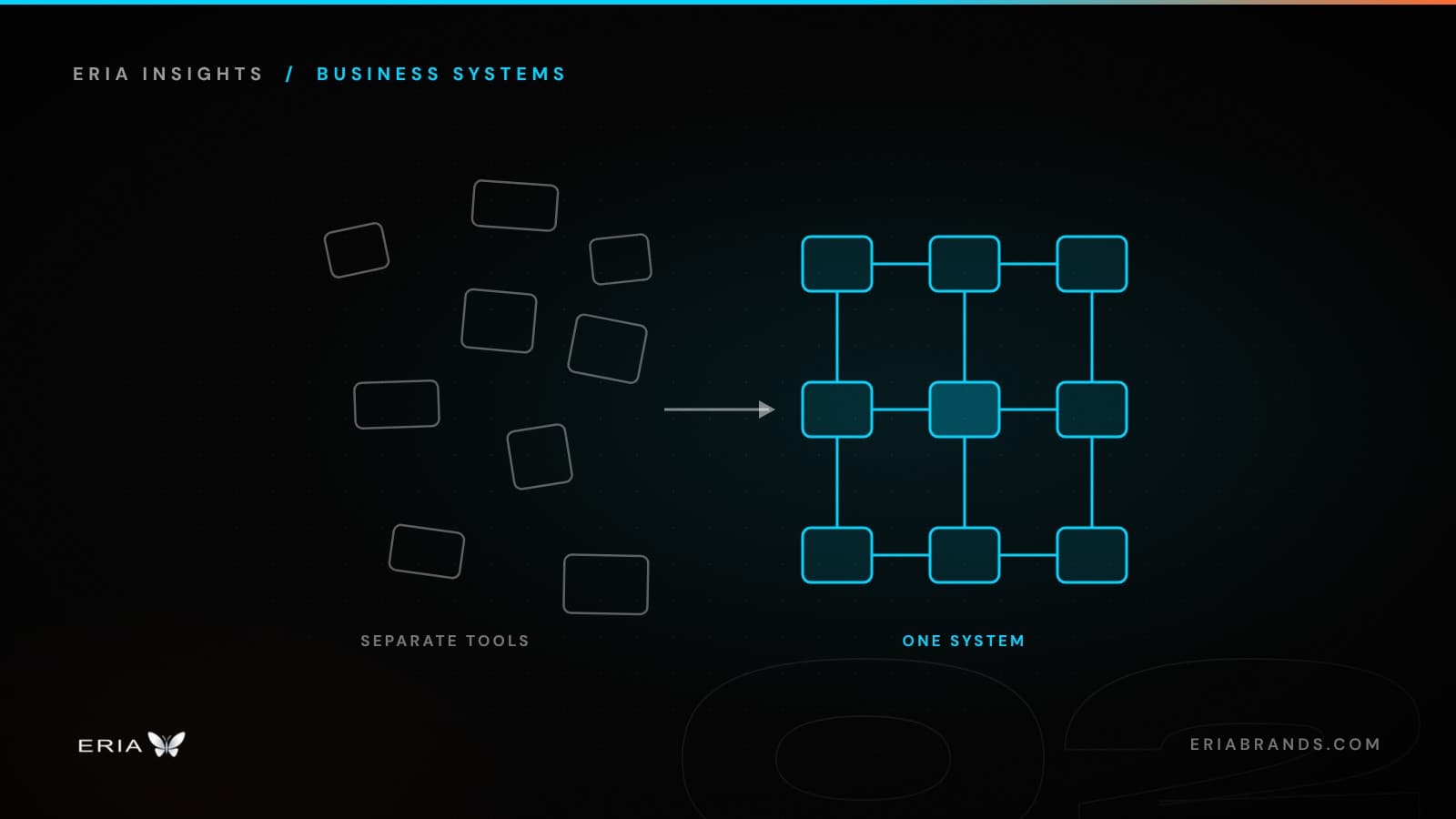
Your Business Doesn't Need More Tools. It Needs Better Systems.
Adding software can feel like progress. But when every tool operates separately, the business can become harder to manage instead of easier.
READ INSIGHT →
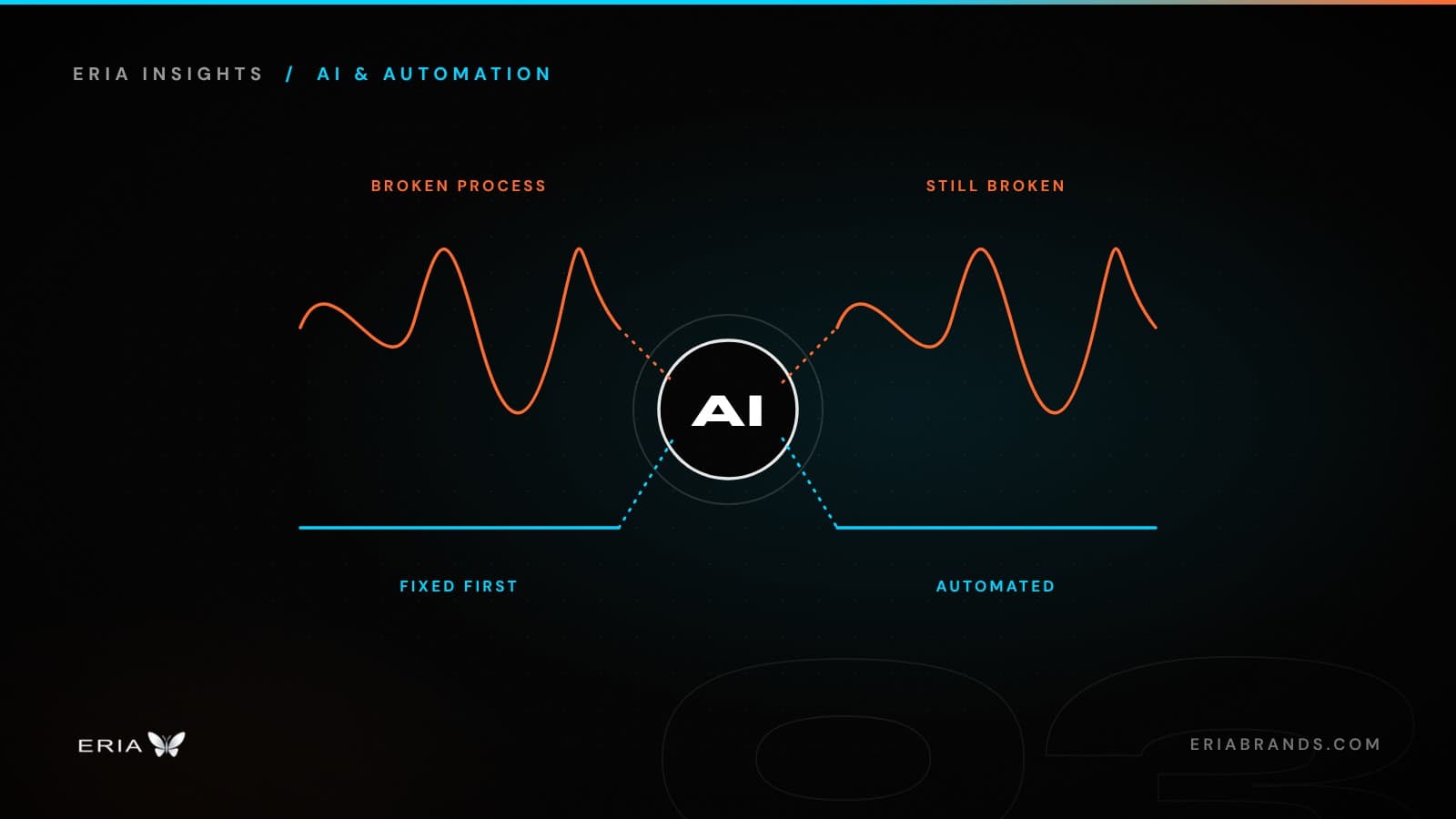
AI Won't Fix a Business With Broken Processes.
Automation can make a good process faster. It can also make a bad process fail faster. The difference starts with understanding how the business works.
READ INSIGHT →
BUILD WITH ERIA
Have A Project In Mind?
Is your business still relying on external platforms to manage its bookings? Let's explore what a booking system designed around your operation could look like, what it would take to build, and whether the investment makes financial sense.