Your Business Doesn't Need More Tools. It Needs Better Systems.
Adding software can feel like progress. But when every tool operates separately, the business can become harder to manage instead of easier.
By Hamza Hourri
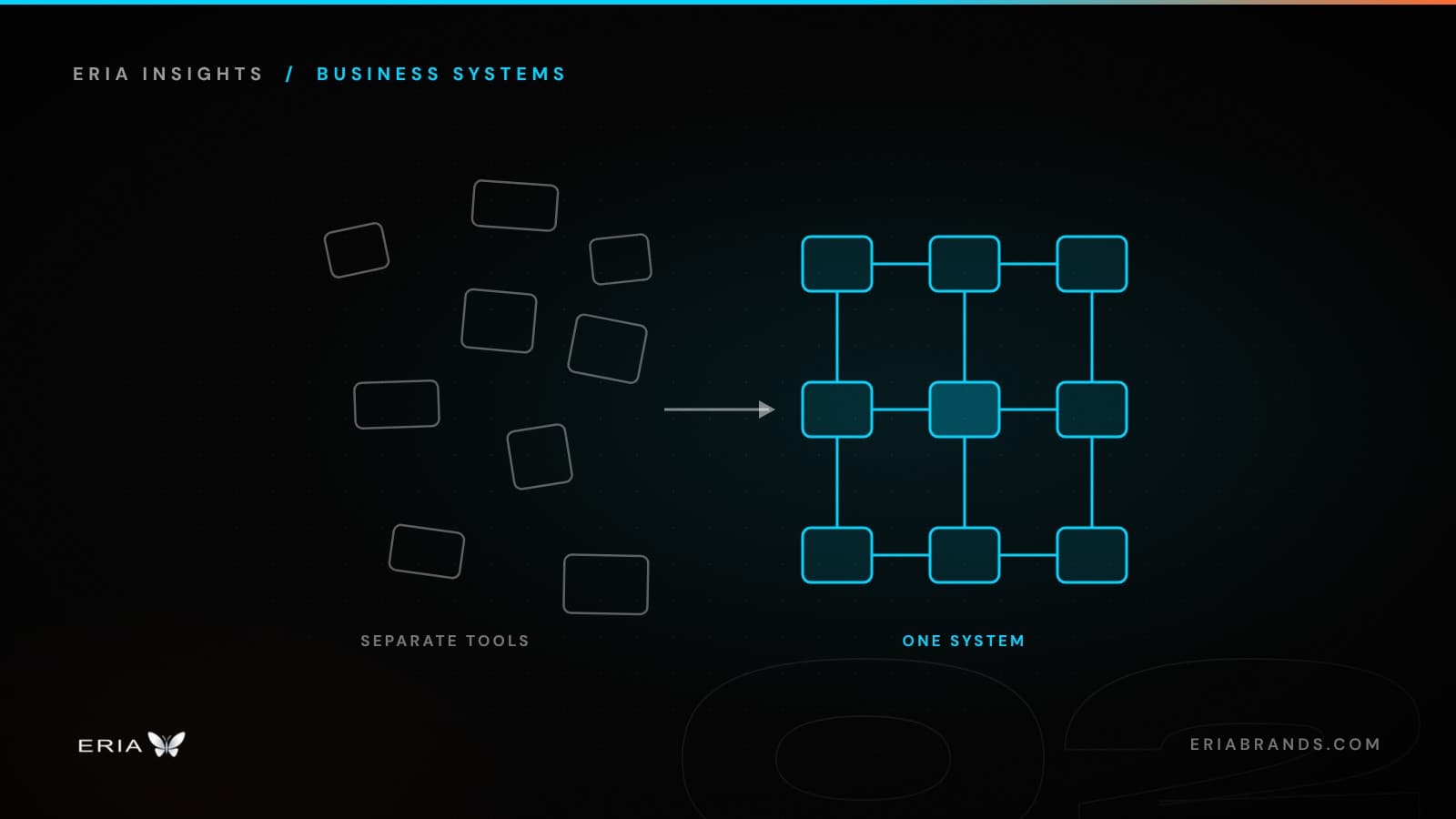
The instinct to add another tool
When a business encounters a problem, the first response is often to find another tool. A new CRM to track leads. Another app for scheduling. A separate platform for payments. A spreadsheet to monitor operations. A messaging app to keep everyone updated.
Each tool may solve a specific problem. But over time, the business can end up managing a collection of disconnected solutions rather than one coherent way of working.
The issue is not necessarily the number of tools. It is whether they work together and support the same process.
Tools are not the same as systems
A tool performs a function. A system connects the steps required to achieve an outcome.
For example, a booking tool may accept a reservation. But the complete booking process may also require checking availability, recording customer details, confirming payment, notifying staff, preparing the service, and following up afterward.
If those steps happen in separate places and rely on people copying information between them, the business still has a manual process. It simply has more software around it.
A better system considers the full workflow, from the first customer action to the final operational step.
Disconnected software creates hidden work
The cost of disconnected tools is often measured in small tasks: entering the same information twice, checking whether a payment arrived, asking a colleague for the latest status, searching through messages, or correcting inconsistent records.
Individually, these tasks may seem minor. Repeated across a team and across hundreds of transactions, they consume time and create opportunities for mistakes.
They also make it harder for management to understand what is happening. If the information needed to answer a simple question is spread across five tools, reporting becomes another manual process.
Start with the workflow, not the software
Before choosing technology, map how the business currently works.
Where does a new inquiry arrive? Who responds? How is a quote prepared? What happens after a customer accepts? Where is payment recorded? Who needs to be notified? What happens when something changes?
This exercise often reveals unnecessary steps, unclear ownership, repeated data entry, and delays between teams.
Only after understanding the workflow should you decide which tools, integrations, or custom features are needed.
What a connected system can look like
For a service business, a connected workflow might capture an inquiry, create a lead record, assign a team member, prepare a proposal, record the outcome, and trigger an appropriate follow-up.
For a booking business, it might connect availability, reservations, payment status, customer communication, and staff schedules.
A dashboard can provide a shared view of important information, while integrations reduce the need to move data manually. Not every step needs automation. Some decisions should remain with people, especially when they involve exceptions, customer care, or financial approval.
When should you consider custom software?
Custom software becomes worth exploring when existing tools cannot support an important workflow, when multiple systems need to work together in a specific way, or when the business is spending too much time and money maintaining workarounds.
That does not mean every business needs a custom platform. Sometimes the right answer is a better configuration of existing software, a reliable integration, or simply removing tools that are no longer useful.
The objective is not to build more software. It is to reduce complexity and make the operation easier to run.
Build around the way your business actually works
A growing business should not have to redesign every process around the limitations of its software. At the same time, technology should not introduce unnecessary complexity.
The right system gives people a clearer view of their work, reduces avoidable manual steps, and helps information move reliably between the people and processes that need it.
At Eria, we look at the business process first, then determine whether existing tools, integrations, automation, or custom development offer the most practical solution.
ERIA / BRAND & DIGITAL TRANSFORMATION
Building brands and digital experiences that move businesses forward.
RELATED ARTICLES
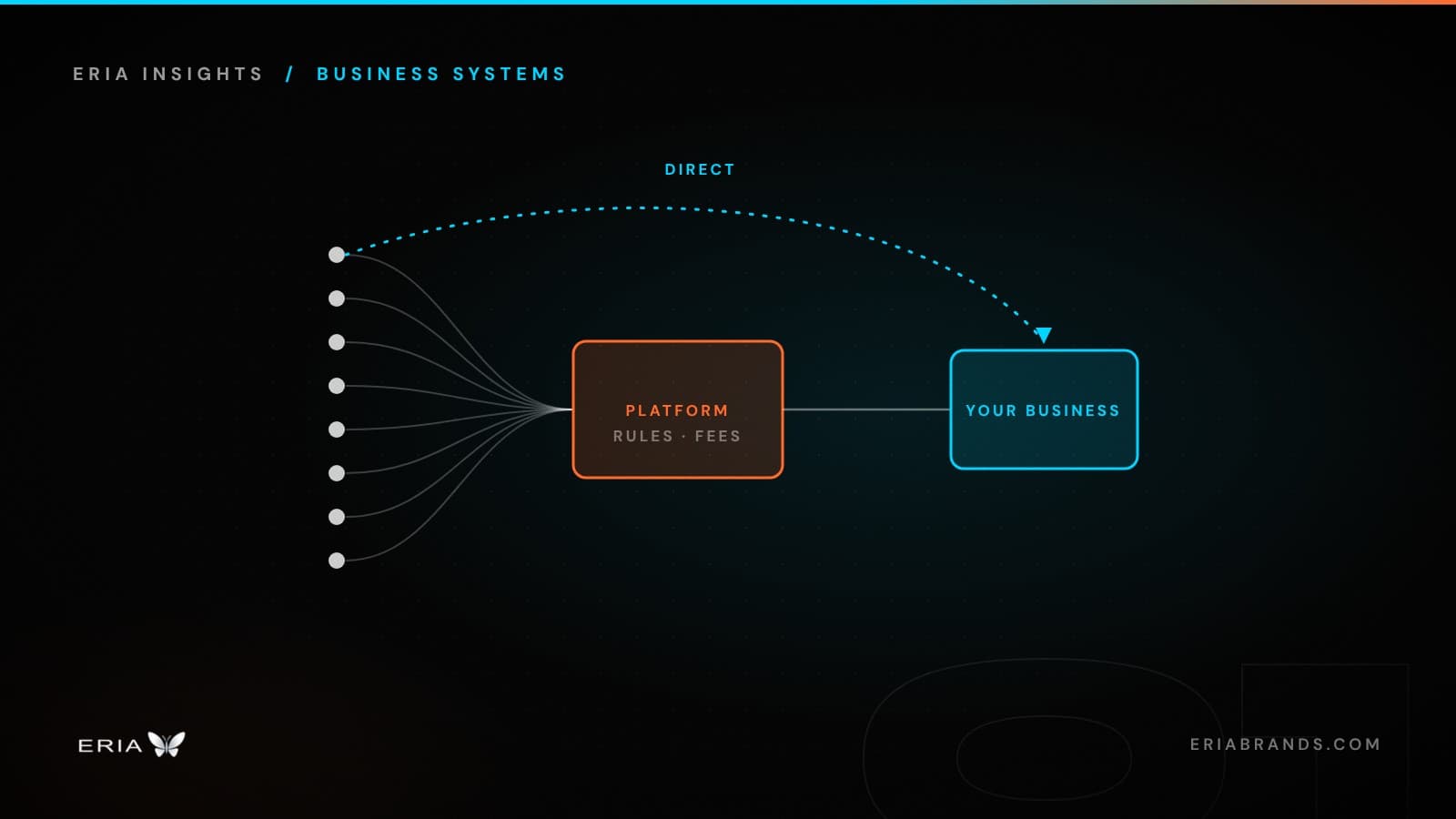
You're Getting Bookings, But Are You Building Your Business?
The hidden cost of relying on third-party booking platforms, and why businesses should start owning the systems behind their reservations.
READ INSIGHT →
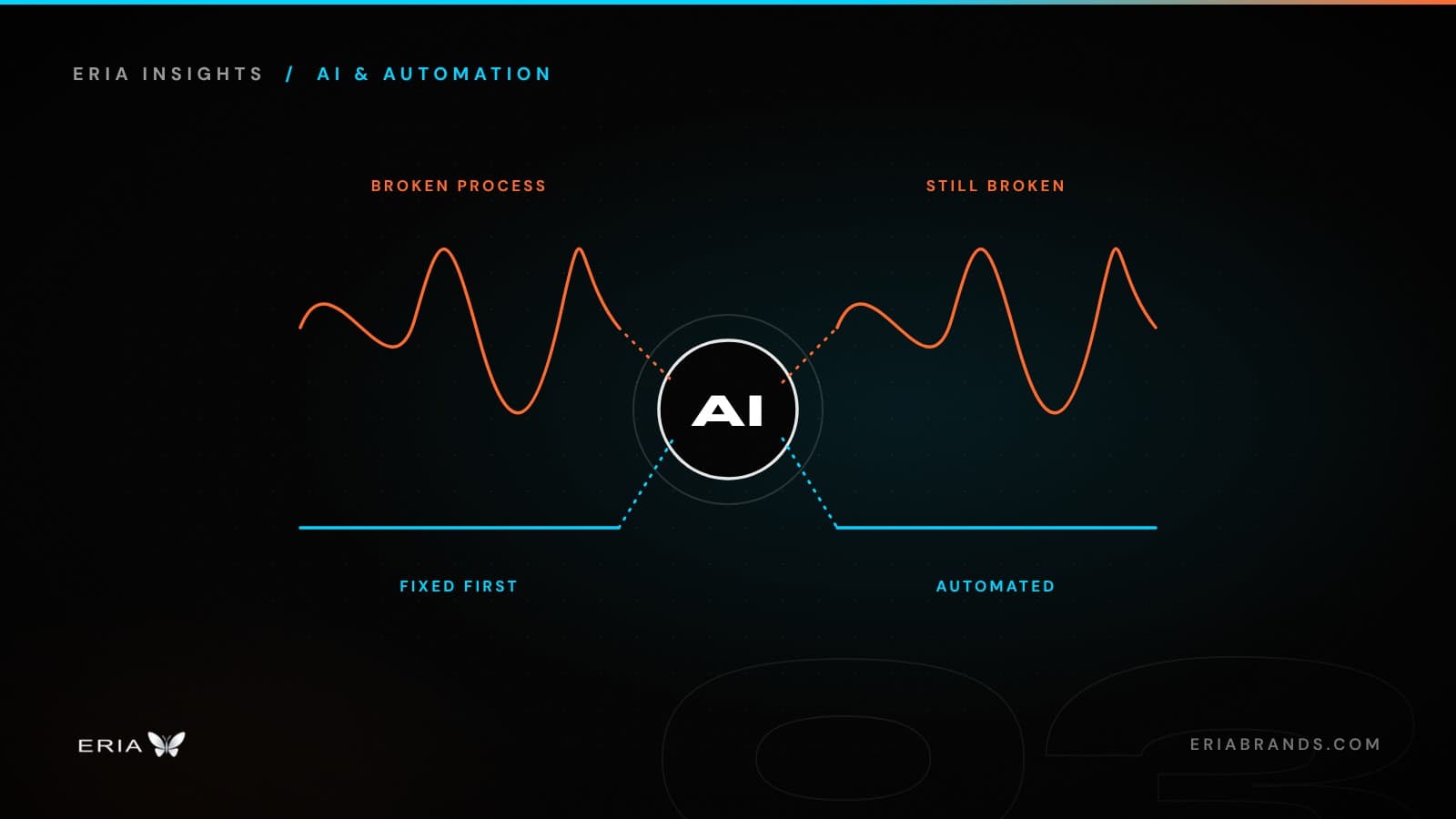
AI Won't Fix a Business With Broken Processes.
Automation can make a good process faster. It can also make a bad process fail faster. The difference starts with understanding how the business works.
READ INSIGHT →
BUILD WITH ERIA
Have A Project In Mind?
If your team is managing too many disconnected tools, let's map the workflow and identify what should be simplified, connected, or rebuilt.