Your Customers Are Already Telling You What Your Business Needs to Improve.
Repeated questions, booking friction, delays, and complaints are not just customer-service issues. They can reveal problems in the systems behind your business.
By Hamza Hourri
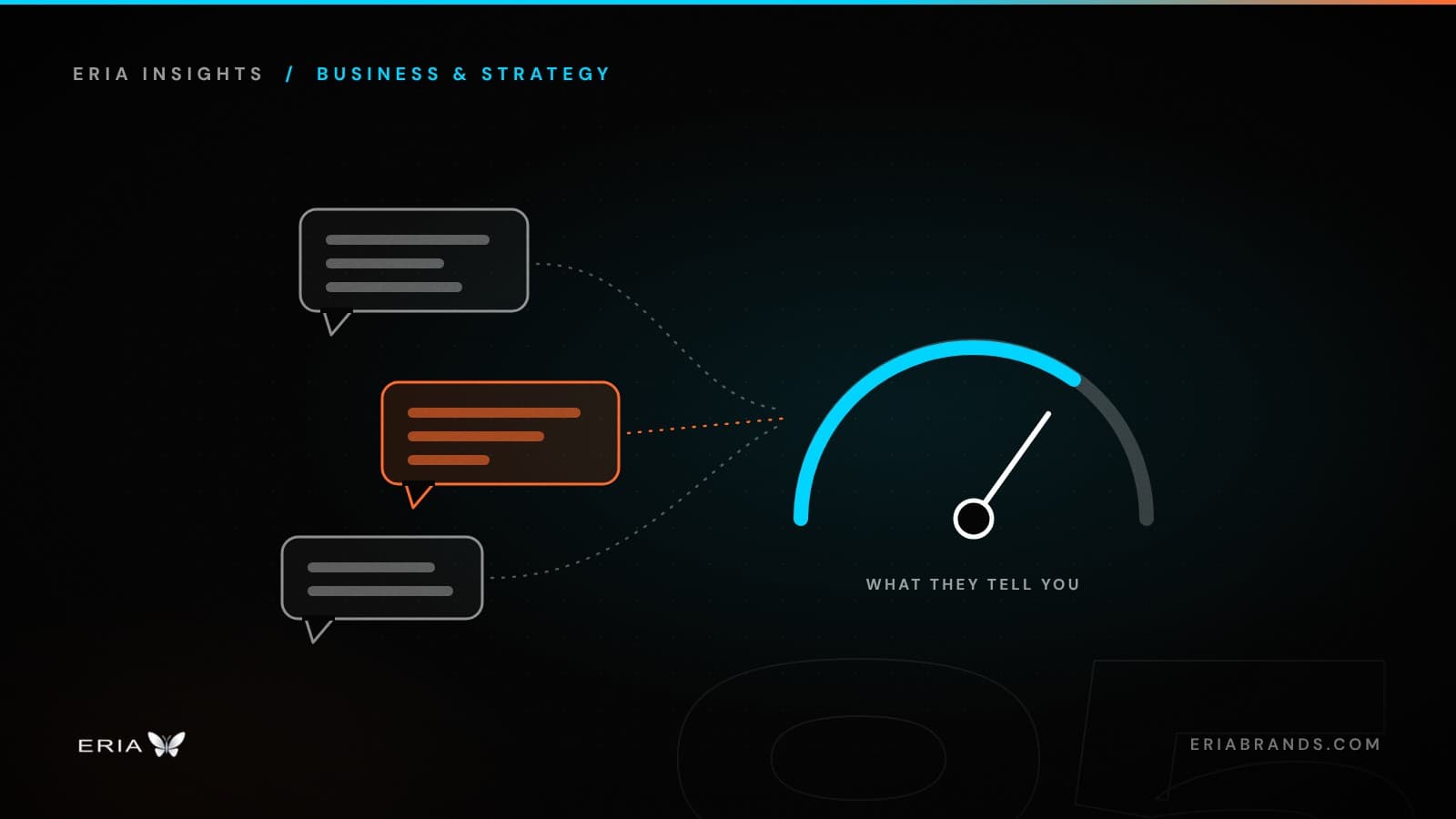
Look beyond the complaint
A customer says nobody confirmed the booking. Another asks the same question that three other customers asked this week. Someone abandons a form because it is difficult to complete on a phone.
It is easy to treat each situation as an isolated customer-service issue. But repeated problems often point to something deeper.
A missing confirmation may indicate a disconnected booking workflow. Repeated questions may reveal unclear website information. Slow responses may show that inquiries are not being assigned or tracked properly.
The customer sees the experience. The business needs to understand the process that created it.
Repeated questions are a signal
If customers regularly ask about prices, availability, location, required documents, or what happens after payment, the business may not be communicating those details clearly.
The answer is not always to add more text to the website. It may require better page structure, clearer service descriptions, an updated FAQ, a more useful booking flow, or improved communication at a specific stage.
Track the questions that appear repeatedly. They can show where customers are uncertain and where the business is spending unnecessary time explaining the same information.
Friction often starts behind the scenes
A customer may experience a delay without knowing why. Perhaps staff are checking availability manually. Maybe payment confirmation is separate from the booking record. Perhaps a request has to pass through several people before anyone can respond.
These are operational issues that become visible through the customer experience.
Mapping the journey from first contact to service delivery can help identify where information gets lost, where responsibility is unclear, and where a process depends too heavily on manual follow-up.
Turn feedback into something actionable
Collecting feedback is useful only when the business can learn from it. Group comments by theme rather than reacting to every message independently.
Look for patterns such as slow response, unclear pricing, repeated booking errors, missed updates, difficult payments, or inconsistent service information. Then estimate how often each issue occurs and how much time or customer effort it creates.
Not every complaint requires a technology project. Some problems need staff training, clearer communication, or a policy change. Others may require a redesigned process or a better digital system.
Improve the whole journey, not just one screen
Customer experience is shaped by every interaction: discovering the business, understanding the offer, asking a question, booking, paying, receiving updates, using the service, and getting support afterward.
Improving only the homepage will not solve a payment process that is confusing. Adding a chatbot will not fix a booking workflow that has no clear owner.
The best improvements connect the visible experience with the internal process that supports it.
Measure whether the experience is improving
Choose a small number of measures connected to the problem. These might include average response time, booking completion rate, repeated inquiry volume, cancellation reasons, support requests, or the number of manual steps in a workflow.
Use a baseline before making changes, then review the same measure afterward. Combine the numbers with customer and staff feedback so the business understands not only what changed, but why.
Be careful about attributing every improvement to one change. Other factors may influence customer behavior and business performance.
Listen to what the experience is revealing
Customers may not know which internal system needs to change. But their experience can show where the business is creating friction.
Repeated questions, delays, and complaints are useful signals. When the business investigates the process behind them, it can make improvements that benefit both customers and the team.
At Eria, we look at digital customer experiences alongside the systems and workflows that support them. The aim is to solve the underlying problem, not simply redesign the part customers can see.
ERIA / BRAND & DIGITAL TRANSFORMATION
Building brands and digital experiences that move businesses forward.
RELATED ARTICLES
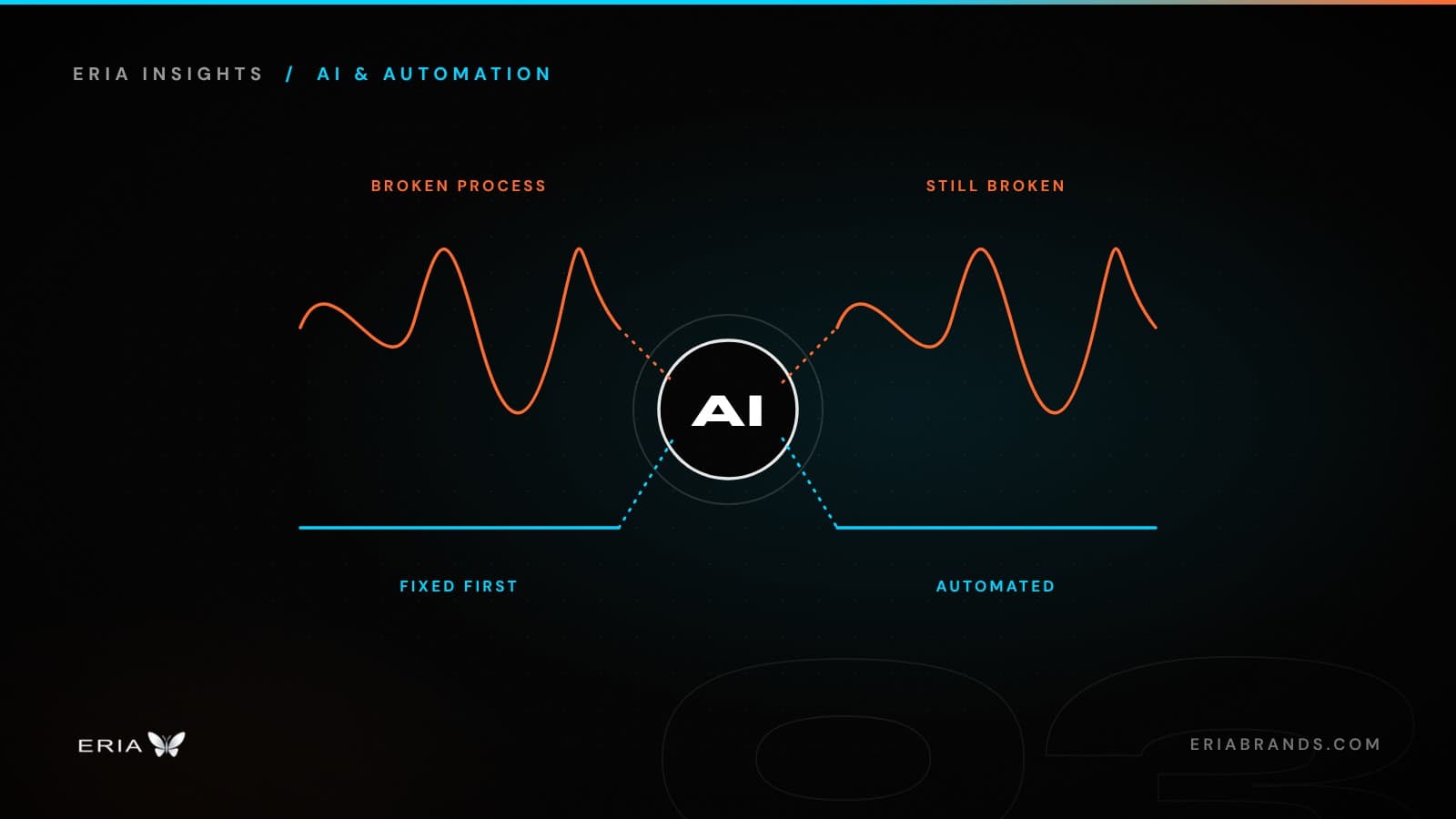
AI Won't Fix a Business With Broken Processes.
Automation can make a good process faster. It can also make a bad process fail faster. The difference starts with understanding how the business works.
READ INSIGHT →
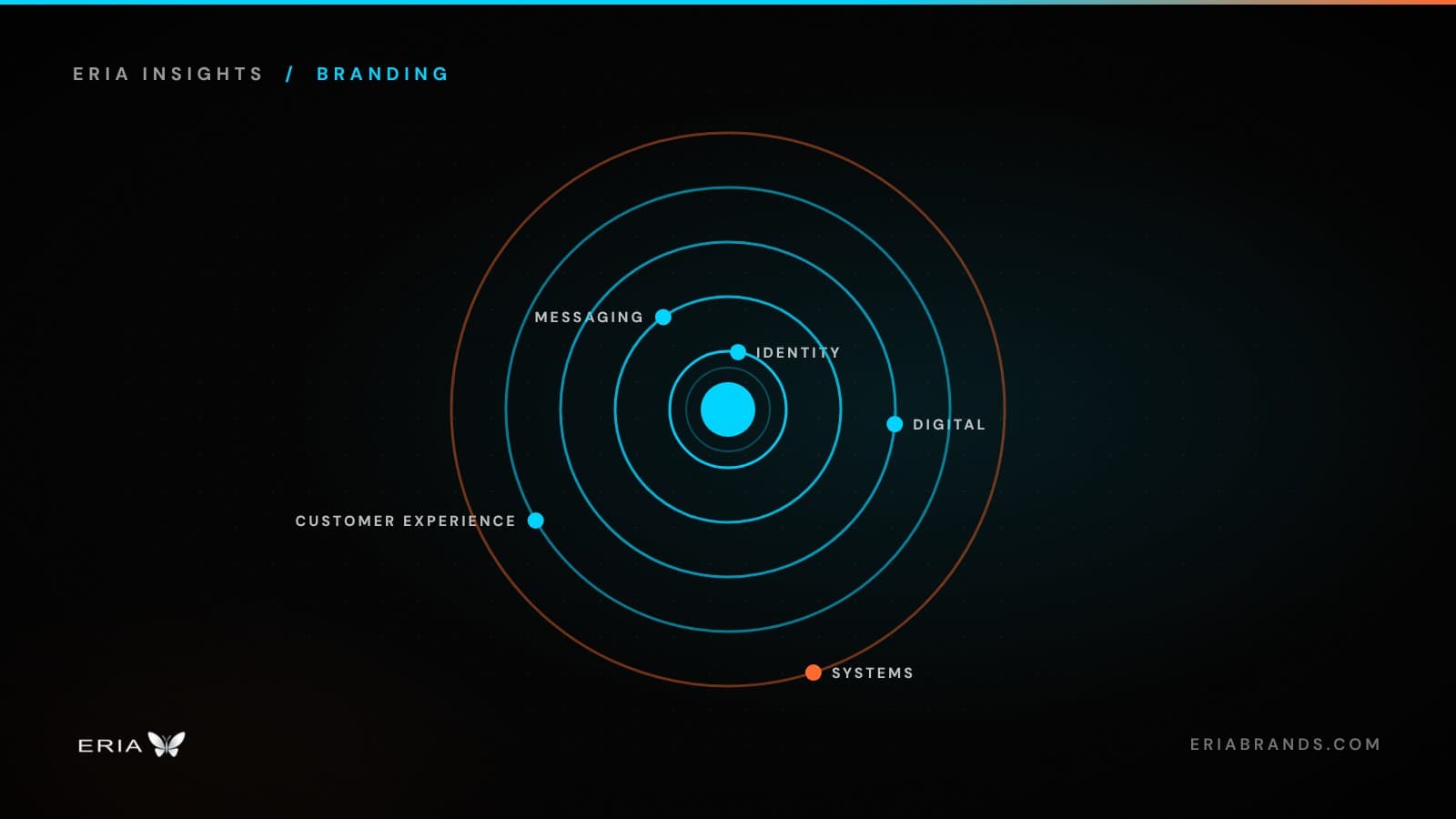
Branding Is Not Just a Logo. It’s the Entire Customer Experience.
A brand is not what people see. It's what they experience, remember, and associate with your business.
READ INSIGHT →
BUILD WITH ERIA
Have A Project In Mind?
If the same customer problems keep appearing, let's trace them back to the process behind the experience and identify the improvements that will make a real difference.