Custom Software vs. Off-the-Shelf Solutions: When Does Your Business Need Its Own System?
Custom software is not automatically the better choice. The right decision depends on your workflows, constraints, costs, and plans for growth.
By Hamza Hourri
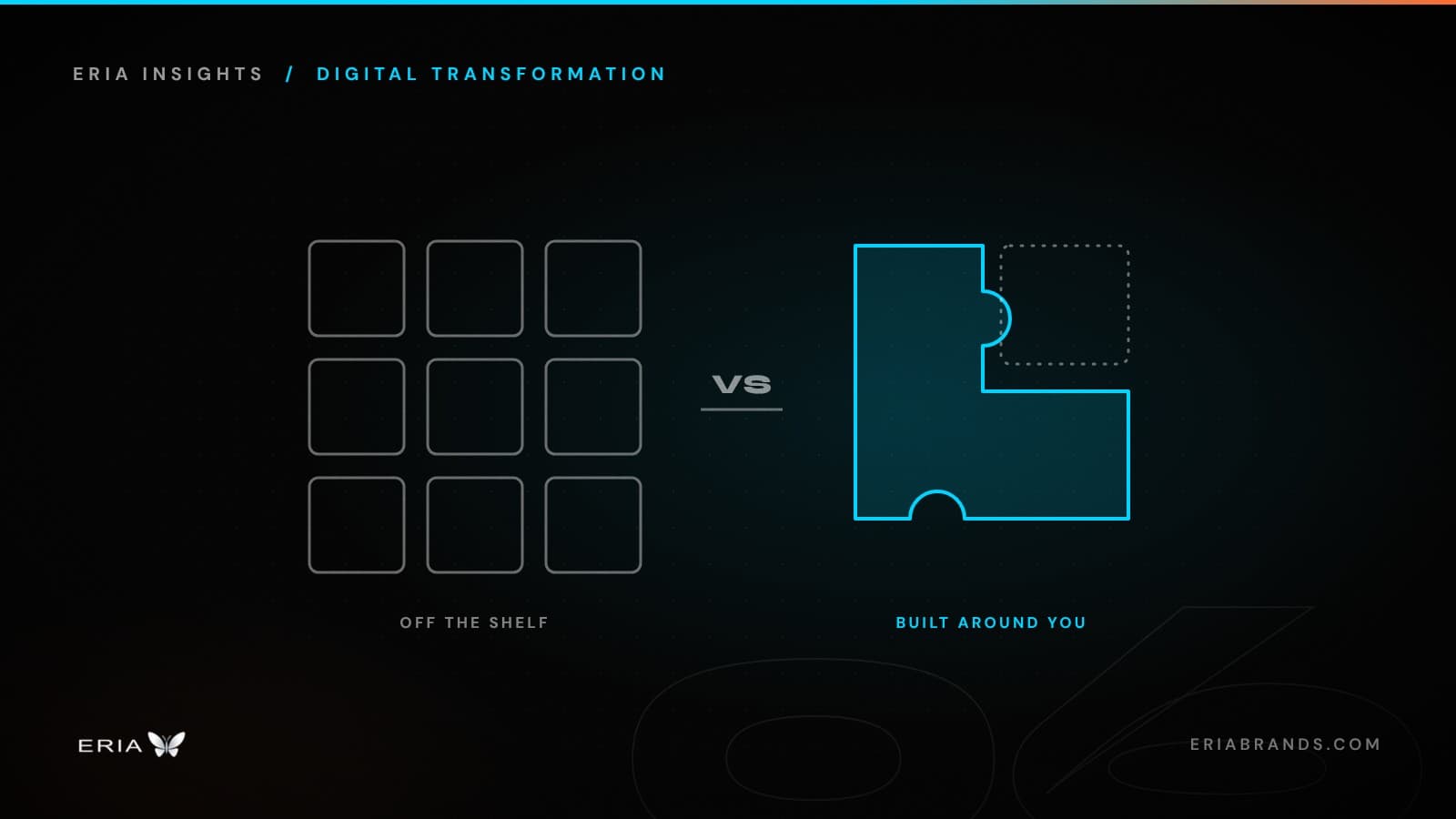
The assumption that custom means better
When a business starts outgrowing its tools, custom software can sound like the natural next step. A platform designed specifically for the company seems more flexible and more professional.
But custom development is not automatically the right investment. Ready-made software can be affordable, reliable, well-supported, and faster to implement. Building a custom system introduces development cost, ongoing maintenance, security responsibilities, and the need for technical support.
The decision should be based on the business problem, not on the idea that owning software is always better.
Where off-the-shelf solutions make sense
Ready-made tools are often the best choice when the business has standard requirements and the product already supports the necessary workflow.
Accounting, email marketing, scheduling, customer relationship management, payments, and team communication are examples of areas where established products may offer what a business needs.
They can reduce initial investment and provide updates, documentation, and support. Before building something new, it is worth checking whether an existing product can be configured properly.
When ready-made tools start creating limitations
Problems can appear as the business becomes more complex. A tool may not support a specific approval process. Important information may be difficult to share with another system. The business may rely on spreadsheets to fill feature gaps. Staff may have to repeat the same work in several places.
Sometimes the limitation is not the software itself, but how it has been configured or adopted. Other times the business model has genuinely moved beyond what the product was designed to support.
The distinction matters because replacing a tool will not fix an unclear process.
What custom software can offer
Custom software can be designed around specific roles, workflows, rules, integrations, and customer experiences. It may combine several operational functions into one platform or provide a customer-facing experience that standard tools cannot support.
For example, a booking business may need a particular combination of availability rules, pricing, deposits, staff assignment, partner commissions, and multilingual customer journeys. If existing products cannot support these requirements reliably, a custom platform may be worth evaluating.
The benefit is fit and control. The trade-off is responsibility for development, maintenance, security, and future improvements.
Compare the full cost, not just the first invoice
A fair comparison should include more than the initial price.
For an off-the-shelf product, consider subscriptions, transaction fees, user limits, integration costs, add-ons, data export options, and the time spent working around limitations.
For custom software, consider discovery and development, hosting, maintenance, security updates, support, third-party services, future changes, and internal ownership. Custom software can reduce some recurring costs or manual work, but it can also create new operating costs.
The right comparison is the total cost over a realistic period, measured against the business value and operational requirements.
Signs your business may be ready
Custom development may be worth exploring when a core workflow cannot be supported by existing products, when disconnected systems create repeated operational problems, when the business needs a distinctive customer-facing platform, or when workarounds have become expensive and difficult to manage.
It is also important to have stable requirements, a clear owner for the project, realistic budget, and a plan for ongoing maintenance. If the process is still changing every week, it may be better to validate and simplify it before investing in software.
Sometimes the best answer is a combination
A business does not have to choose between using only ready-made software and building everything from scratch.
A practical architecture might use established services for payments, email, analytics, or accounting, while a custom application manages the workflows that make the business different. Integrations connect the parts where appropriate.
This approach can avoid rebuilding commodity features while giving the business more control over its important processes.
Choose the solution that fits the business
The objective is not to own the most software. It is to operate with the right level of complexity, cost, and control.
For some businesses, a well-configured subscription product is enough. For others, integrations will solve the gaps. And for businesses with distinct workflows or platform requirements, custom software may be a sensible long-term investment.
At Eria, we help businesses evaluate the problem before choosing the technology. The right solution might be an existing tool, a connected system, a custom platform, or a combination of all three.
ERIA / BRAND & DIGITAL TRANSFORMATION
Building brands and digital experiences that move businesses forward.
RELATED ARTICLES
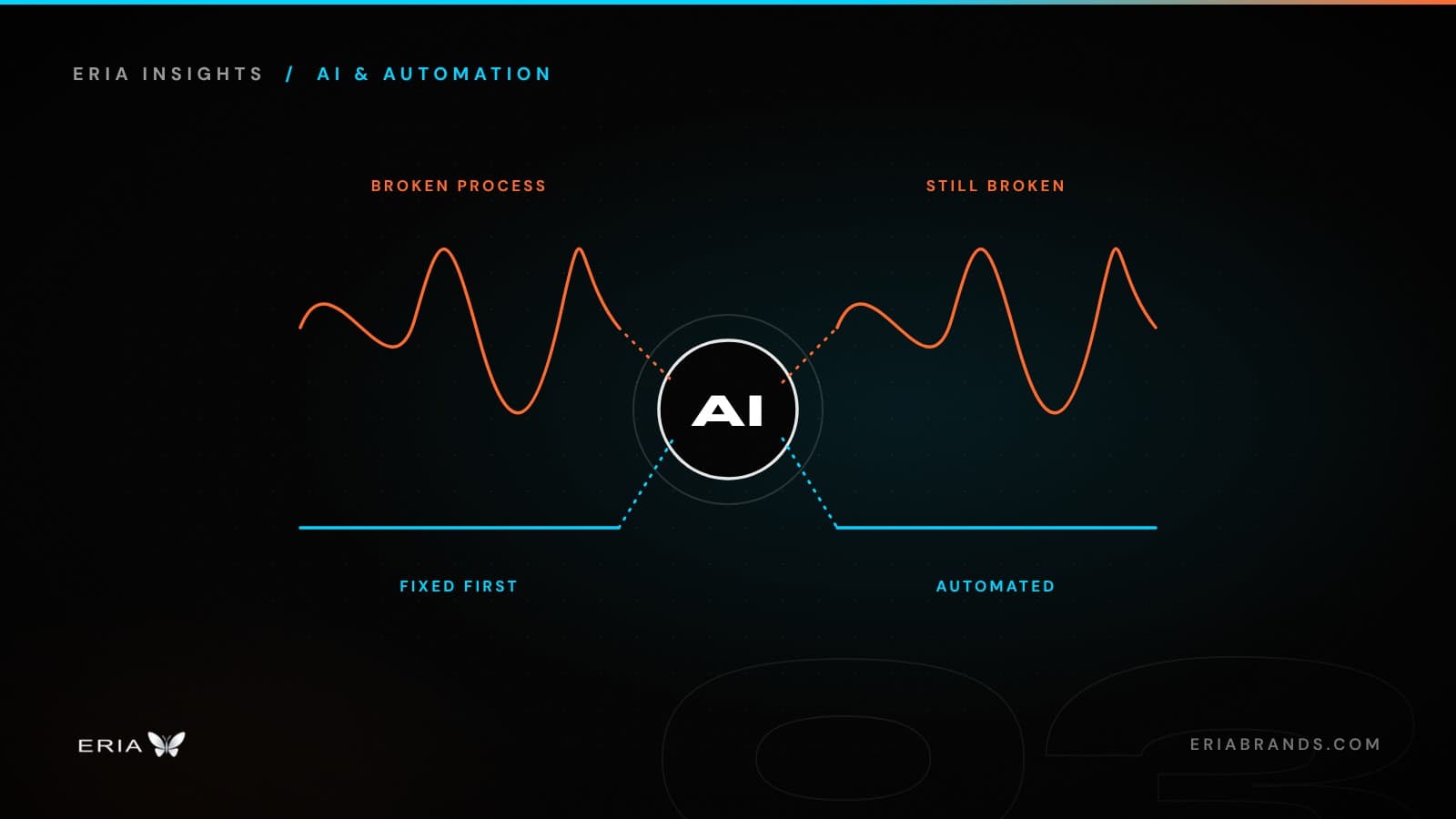
AI Won't Fix a Business With Broken Processes.
Automation can make a good process faster. It can also make a bad process fail faster. The difference starts with understanding how the business works.
READ INSIGHT →

Branding Is Not Just a Logo. It’s the Entire Customer Experience.
A brand is not what people see. It's what they experience, remember, and associate with your business.
READ INSIGHT →
BUILD WITH ERIA
Have A Project In Mind?
If your current software no longer fits the way your business operates, let's assess whether configuration, integration, or custom development is the most practical next step.